Commercial · Greater Houston
Commercial Roof Maintenance in Houston
Scheduled inspections, drain cleaning and small repairs for flat, low-slope and steep-slope commercial roofs. Every visit ends with a photo report you can hand to an owner, a board or an insurer.
Most commercial leaks start as a clogged drain, an open seam or a cracked sealant joint. Found on a scheduled visit, they cost little to fix. Found by a tenant, they cost a ceiling, inventory and a phone call nobody wants.
- 13years in Houston roofing
- 4.8★400+ Google reviews
- A+BBB accredited since 2014

Why maintenance matters
What Grows on a Flat Roof Nobody Visits
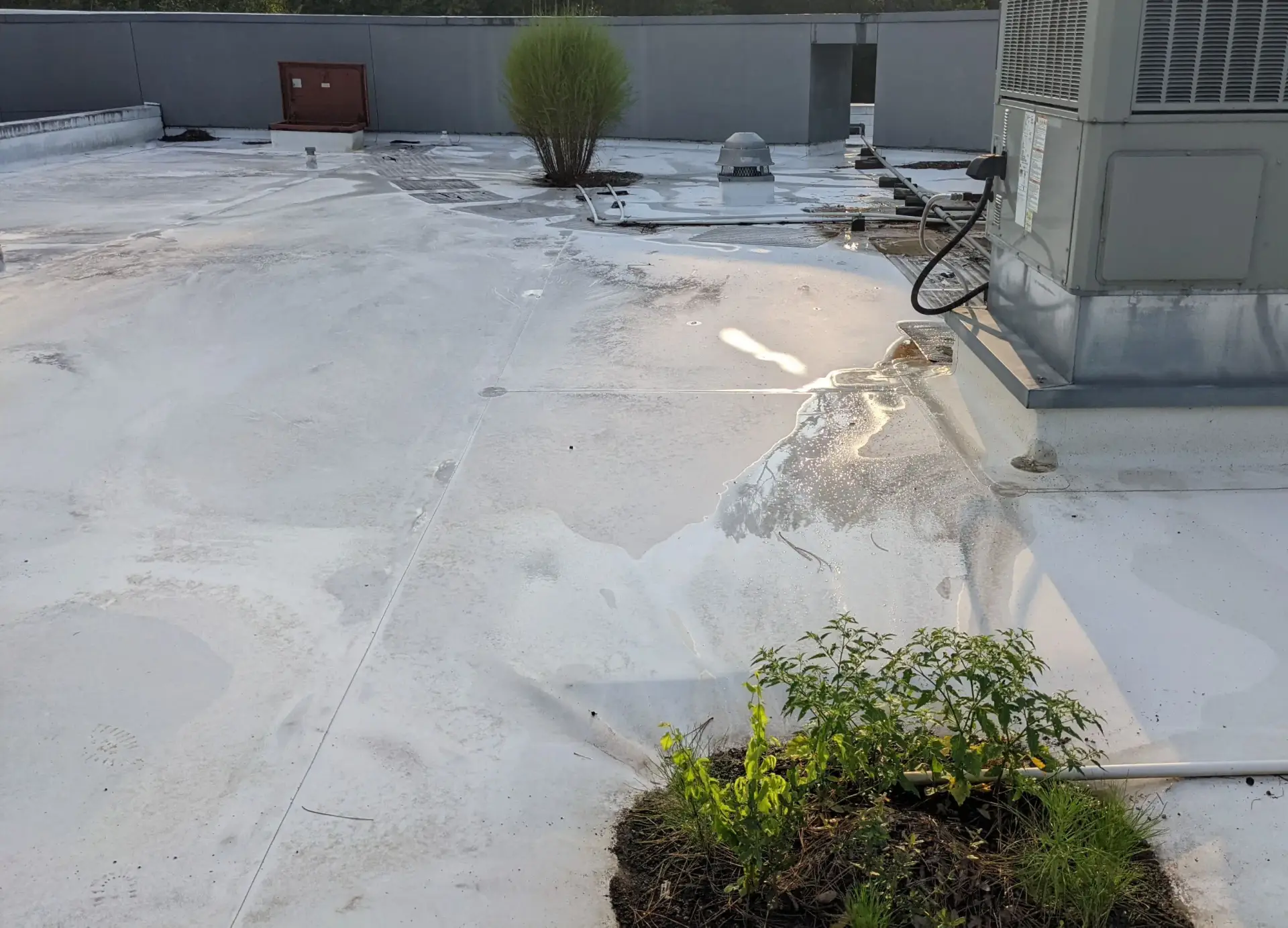
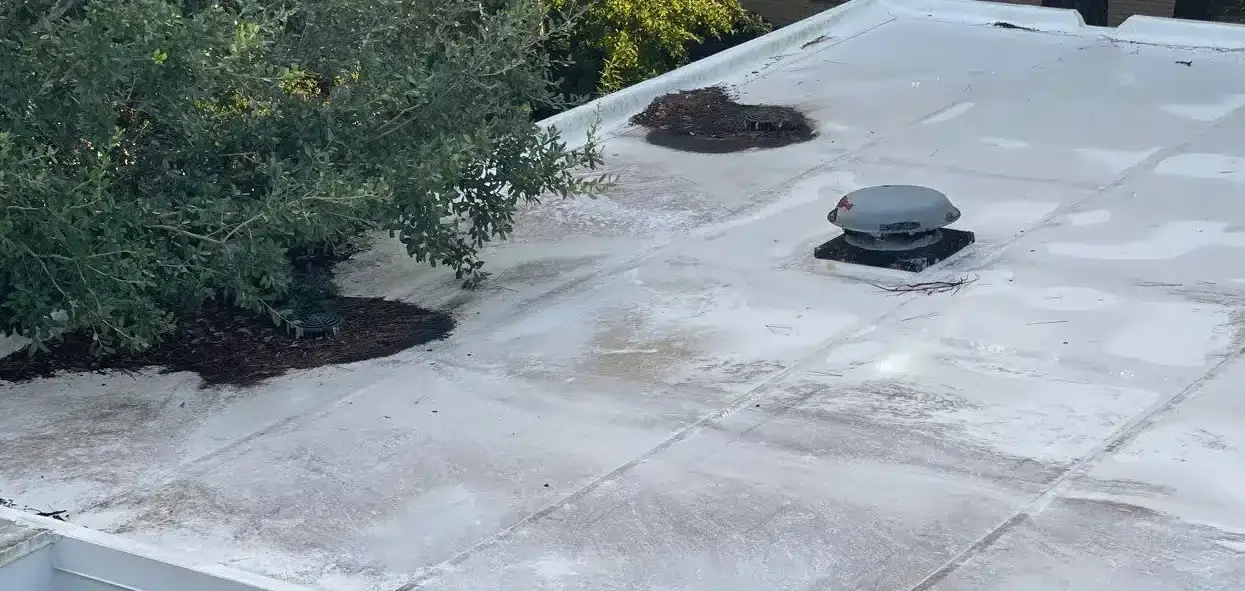
These photos are from a Houston commercial roof that went years without a visit. Leaves washed toward the drains and stayed there. The debris held water, the water held soil, and seeds did the rest.
By the time we were called, shrubs were rooted in the membrane. Roots work into seams and laps, the blocked drains leave water ponding for days, and every one of those spots is a leak waiting for the next heavy rain.
The fix was not a new roof. Clearing the growth, opening the drains and repairing the damaged membrane kept that roof in service. A scheduled visit twice a year would have caught it as a pile of leaves.
- Clogged drains leave water ponding, which shortens the life of any membrane.
- Open seams and punctures let water travel under the membrane before it shows inside.
- Cracked sealant at coping, curbs and penetrations is where most commercial leaks start.
- Missing records can make a manufacturer warranty or an insurance claim harder to support.

Every maintenance visit
What We Check on a Commercial Roof
The same checklist on every visit, on flat, metal and shingle roofs alike, so each report can be compared with the last one and you can see what is changing.

Drains, scuppers & gutters
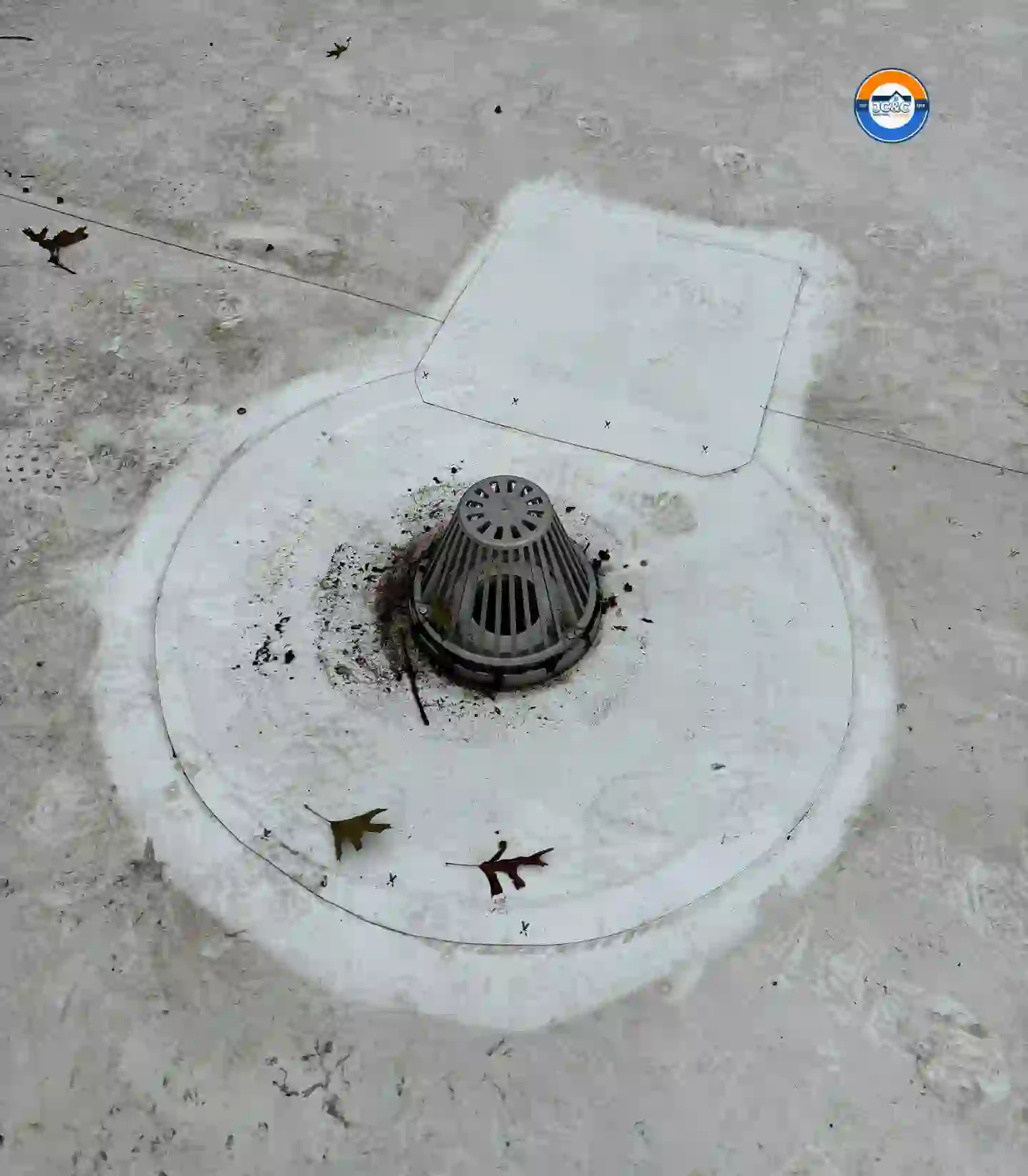
Cleared of leaves and debris and checked for flow, so water leaves the roof instead of ponding on it.

Seams & laps
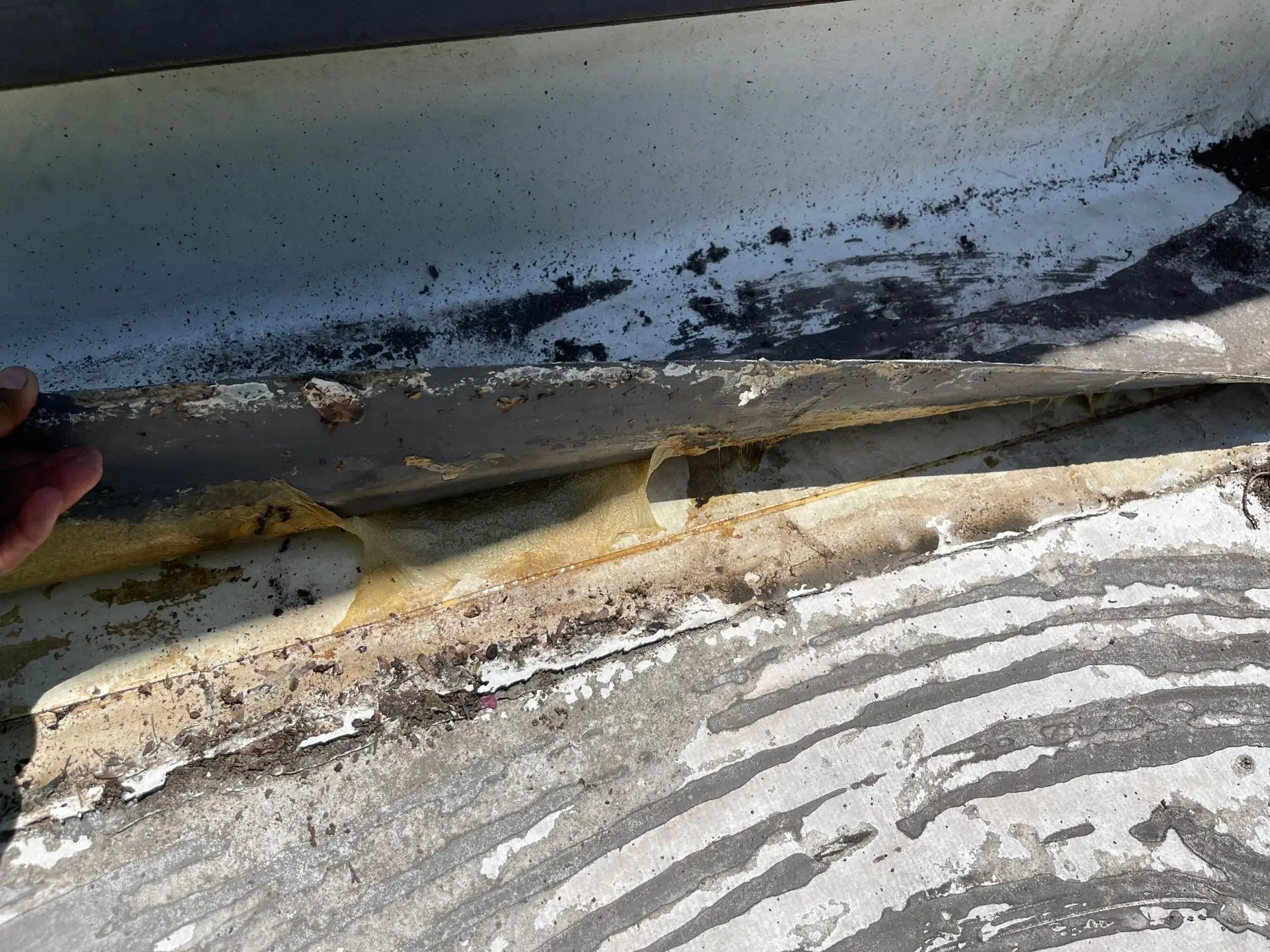
Probed along the seams of TPO, PVC and modified bitumen, where single-ply roofs most often open up.

Wall & curb flashing
Base flashing at parapet walls, curbs and transitions checked for separation, splits and loose terminations.
Coping & sealants
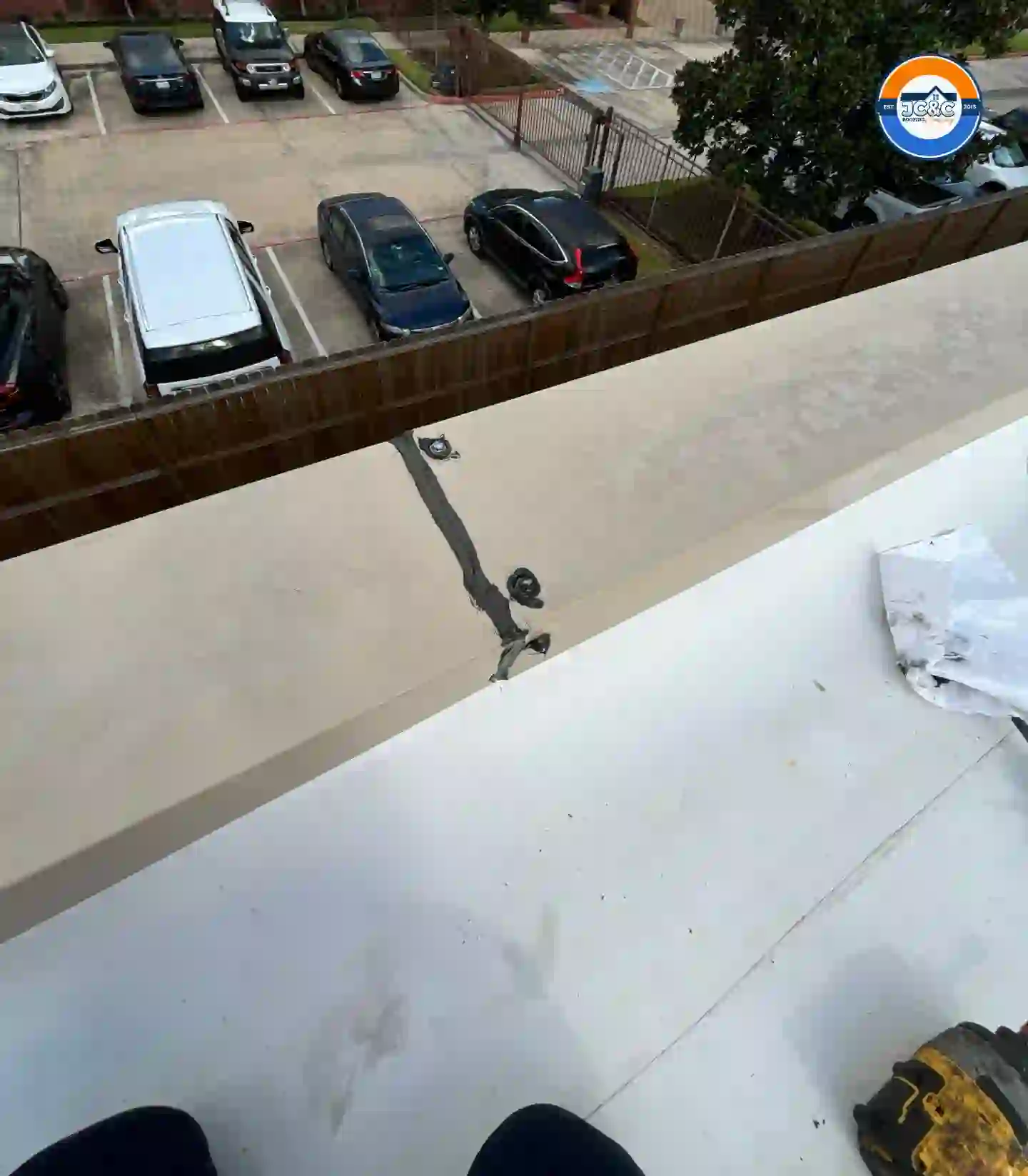
Metal coping, counterflashing and sealant joints checked; cracked or shrunken sealant is replaced.

Rooftop units & penetrations
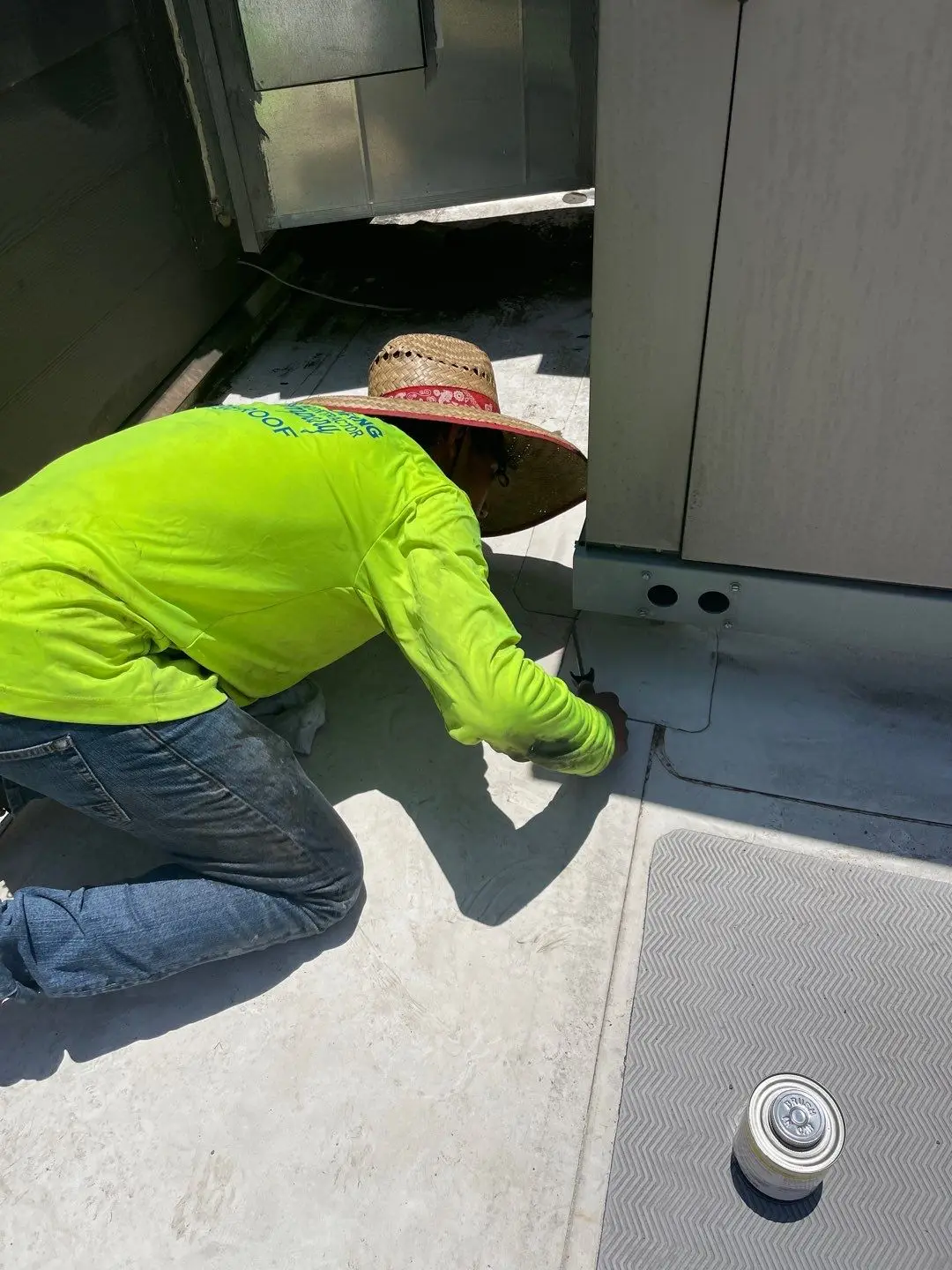
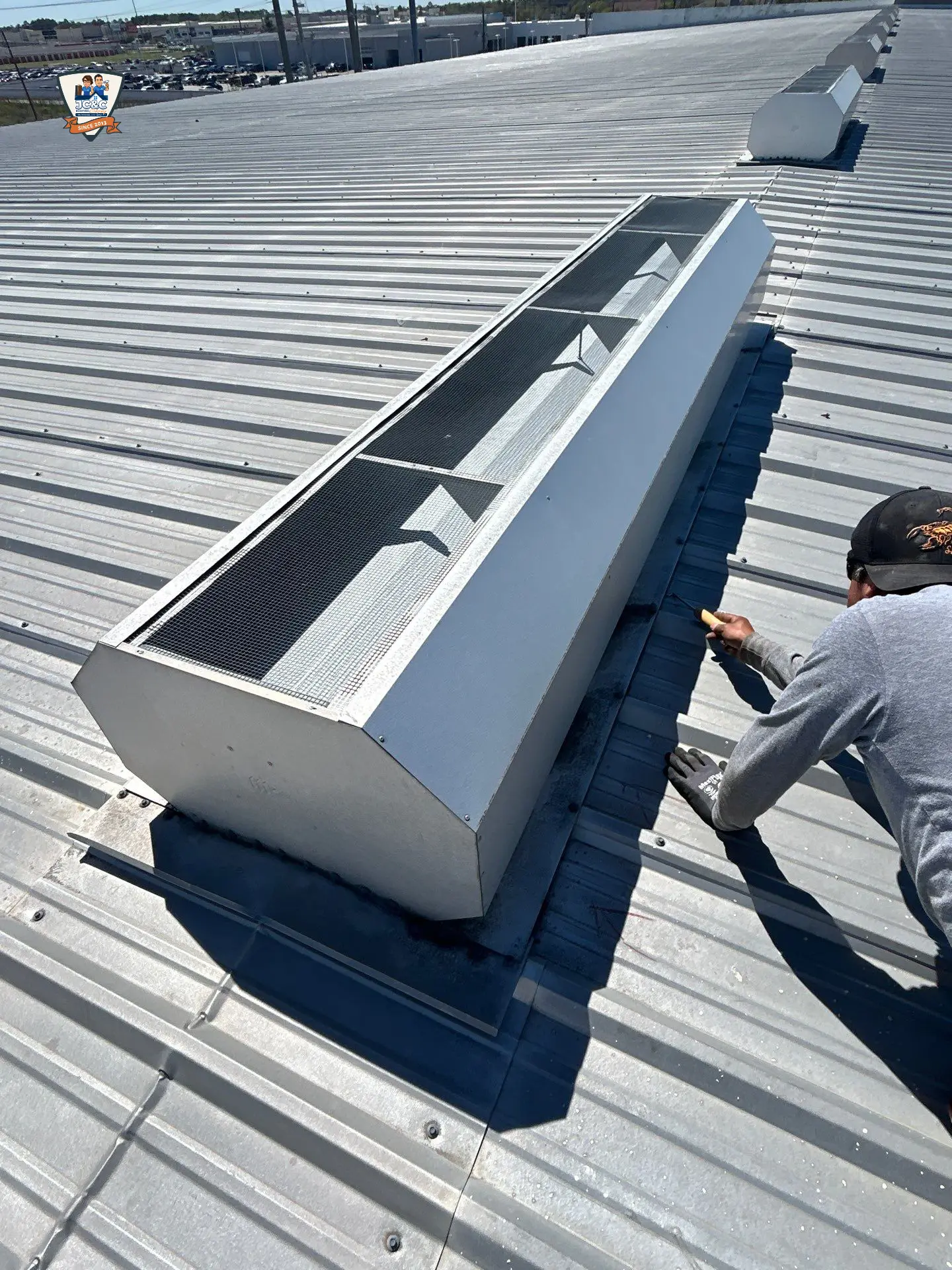
HVAC curbs, condensate lines, pipe boots and pitch pans, plus damage left behind by other trades.

The field of the roof
Punctures, blisters, soft spots and ponding areas marked and photographed across the whole surface.
Debris & vegetation
Leaves, branches, trash and anything growing on the roof removed before it holds water or roots in.
Small repairs on the spot
Minor fixes such as sealant, small patches and loose flashing, done during the visit with your approval.
A photo report
Every finding with a photo, its location on the roof and a priority: fix now, plan for, or watch.

The program
How Often a Houston Commercial Roof Needs a Visit
Twice a year, plus after any major storm. The timing follows the Houston weather calendar, not a round number.
- Spring
Before hurricane season
A full inspection and drain cleaning before June 1, so the roof goes into storm season sealed and draining.
- Fall
After the summer
Heat and UV are hard on sealants and membranes. A fall visit repairs summer damage and clears leaves before winter rain.
- After storms
Hail, wind or a named storm
A post-storm inspection with dated photos, which is what an insurer will want to see if there is a claim.
How it works
- Baseline inspection, at no charge. We walk the whole roof, identify the system, map drains and rooftop units and photograph the condition.
- A written plan and quote. Visit schedule, what each visit includes and any repairs the roof needs now, priced per building.
- Visits scheduled around your tenants. We coordinate access with the property manager and keep foot traffic away from business hours where we can.
- A report after every visit. Photos, locations and priorities, so you can budget repairs before they become emergencies.
What it costs: maintenance is priced per building, based on roof size, the roof system, access, and the number of drains and rooftop units. You get the number in writing after the baseline inspection, before you commit to anything.
Buildings we look after


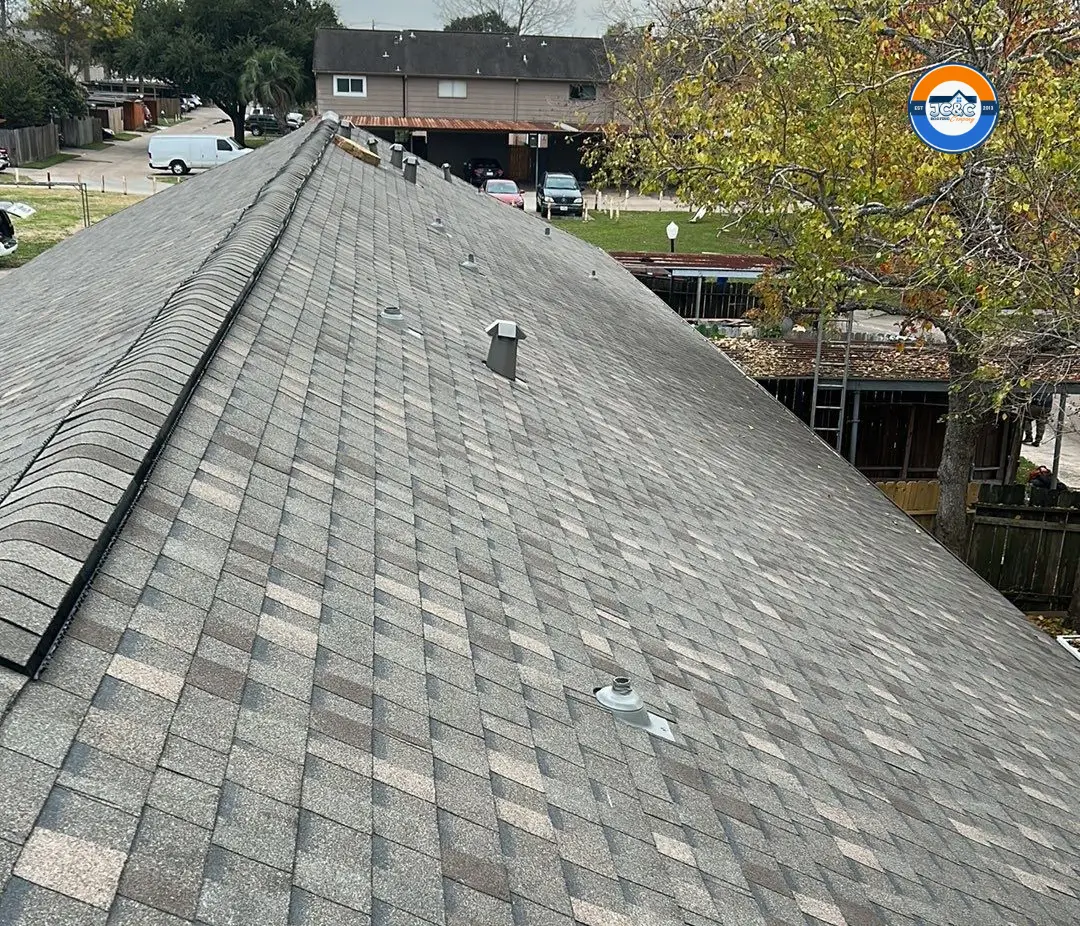
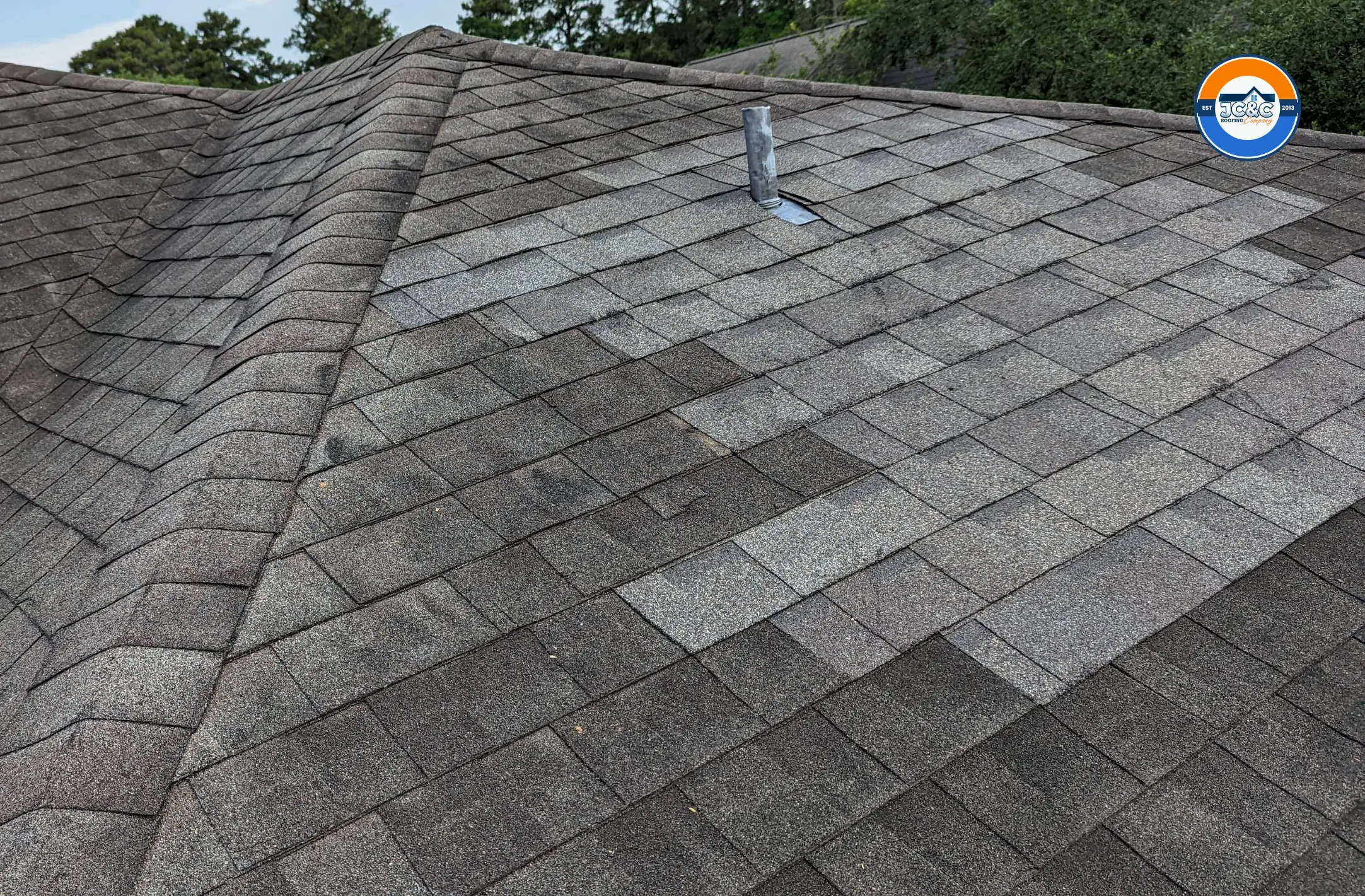
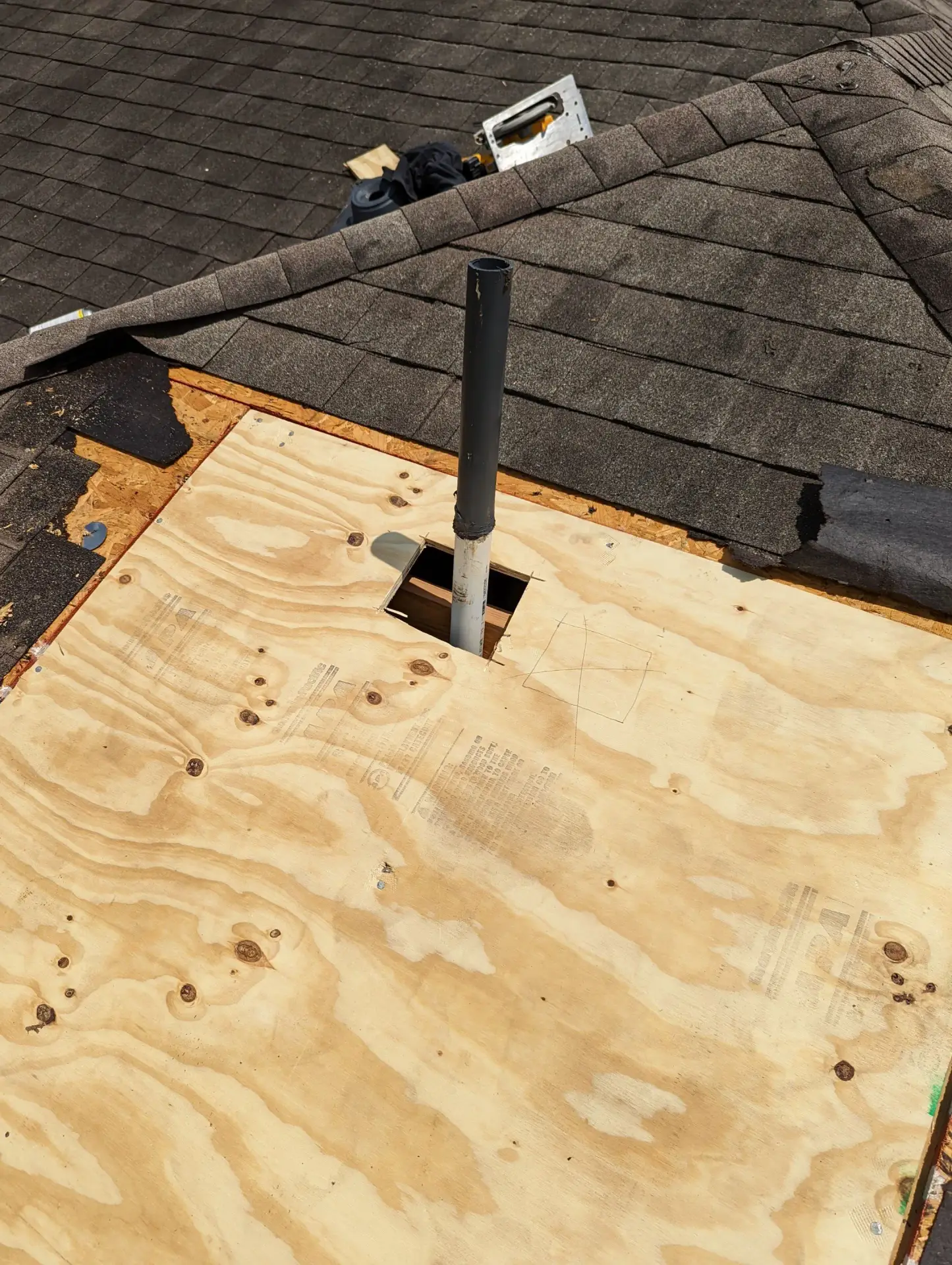
Apartment, condo and HOA communities, office and medical buildings, assisted living homes, retail centers, warehouses, churches and schools. Shingle, metal, TPO, PVC, EPDM, modified bitumen and built-up roofs.
All commercial roofing servicesQuestions
Commercial Roof Maintenance FAQ
How often should a commercial roof be inspected?
Twice a year, in spring and fall, and again after any hail, high wind or named storm. That is the schedule the National Roofing Contractors Association recommends, and it fits the Houston weather calendar: one visit before hurricane season and one after the summer heat.
How much does commercial roof maintenance cost?
It is priced per building. Roof size, the roof system, access, and the number of drains and rooftop units set the price. The first inspection is at no charge, and you get a written quote before you commit to anything.
Does maintenance affect my roof warranty?
It can. Most manufacturer warranties on commercial roof systems make the owner responsible for maintenance and can exclude damage caused by neglect, such as clogged drains. Check the terms of your warranty. Our dated photo reports give you a record of the maintenance that was done.
Do you maintain roofs that another company installed?
Yes. Most of the roofs we maintain were installed by someone else. The baseline inspection tells us what system is on the roof and what condition it is in.
What types of commercial roofs do you maintain?
TPO, PVC, EPDM, modified bitumen, built-up, metal and shingle roofs on apartment and condo communities, office and medical buildings, retail centers, warehouses, churches and schools.
What happens if you find a problem during a visit?
Small fixes, such as sealant, small patches and loose flashing, can be done during the visit with your approval. Anything larger goes in the report with photos and a written price. Nothing is done without your approval.
Will maintenance disturb my tenants?
Most of the work is on the roof and out of sight. We schedule visits with the property manager, coordinate roof access and keep noisy work away from business hours where we can.
What if the roof leaks between visits?
Call (713) 766-3464, answered 24/7. Typical response for an active commercial leak is 2 to 4 hours. The first job is stopping the water; the permanent repair follows once the roof is dry.
Get started
Request a Maintenance Quote
Tell us about the building. We will schedule the baseline inspection, at no charge, and send a written plan and price.
- Commercial(281) 498-7663
- 24/7 leaks(713) 766-3464
- Emailhello@jccroofing.com
Spring Branch office: 1220 Blalock Rd #345, Houston, TX 77055
Main office: 1431 Graham Dr #266, Tomball, TX 77375