

We Inspected a Roof in Champion Forest Today. There Was No Hail Damage.
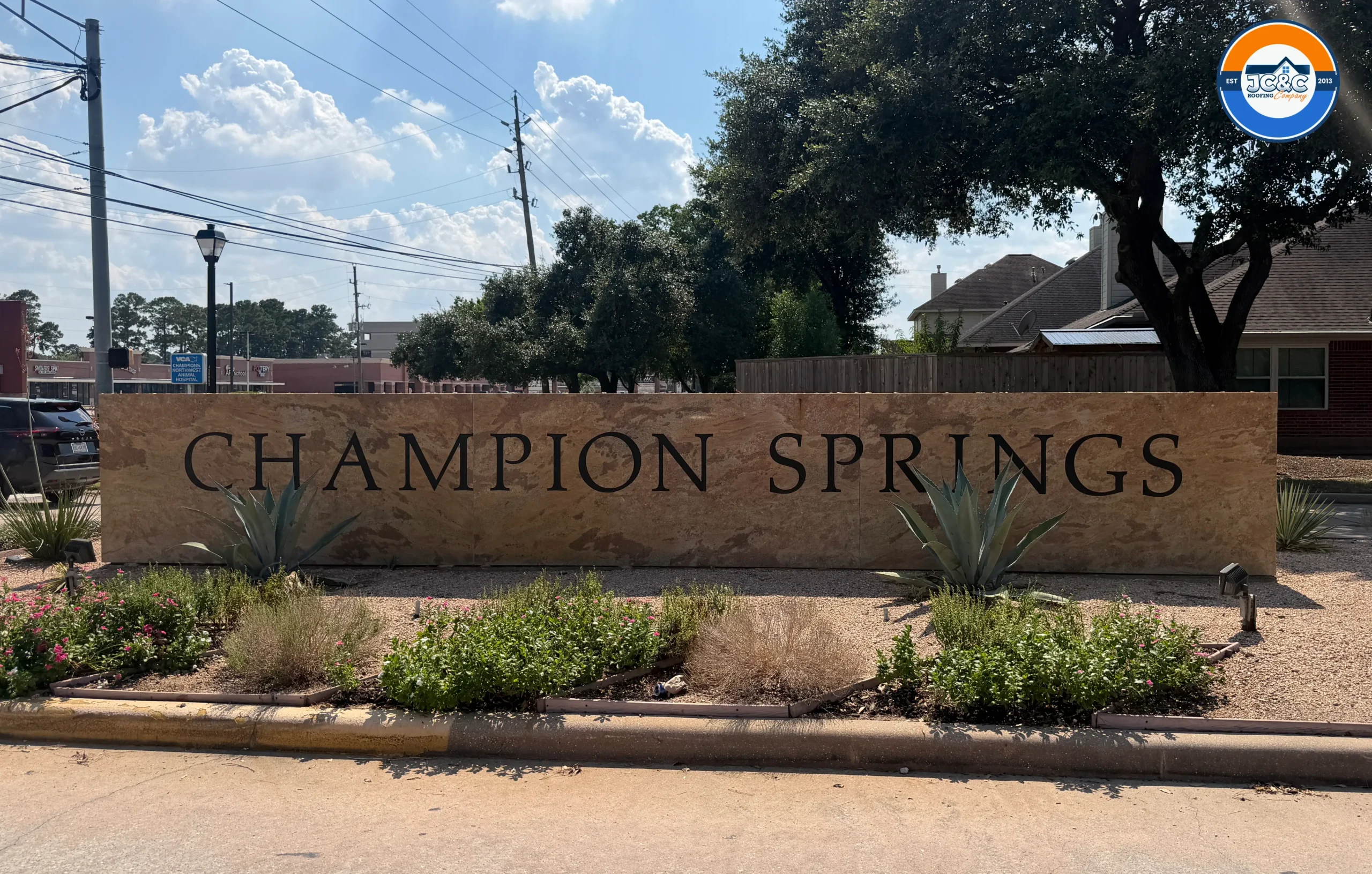
A homeowner in the Champion Springs subdivision called us on 29 August, the day after the hailstorm that came through Spring on the 28th. He wanted to know whether his roof had been damaged.
We went out and checked. It had not been. And we told him so, which is the part of this that seems to be worth writing down.
Why we are publishing this
After a hailstorm, a lot of people knock on a lot of doors. Most of them will tell you that you have damage.
Sometimes you do. Hail falls in bands, and a roof three streets away can be finished while yours is untouched. But a storm passing over your ZIP code does not mean your roof was damaged by it — and there is a way to check that does not depend on trusting whoever is standing on your driveway.
This is one inspection, in one subdivision, on one date. We are not saying nobody in Spring has damage. We are saying that this roof did not, that the reason is measurable, and that you can check the same things on yours.
What the Hail Report Actually Said
The reported hail for ZIP 77379 was around 1 to 1.25 inches — roughly the size of a quarter, and at the upper end about the size of a half-dollar.

Hail at that size does not normally fracture the shingle mat. It can dislodge granules and it can mark soft surfaces, but the fiberglass mat underneath — the layer whose failure actually ends a shingle’s life — usually survives it intact.

That distinction matters, because a bruise is what an insurer pays for. Granule loss on its own, without a fractured mat beneath it, is generally read as wear rather than storm damage — and a claim built on it is likely to be denied.
The part worth learning
Soft Metals Tell You the Truth About the Storm
Almost every roof has soft metal on it — aluminum vents, gutters, downspouts, flashing, turbine housings, ridge caps. Aluminum dents far more easily than a shingle mat fractures.
That gives you a physical record of what the storm actually did. The soft metals sat through exactly the same hail as the shingles, on the same roof, for the same minutes. They cannot exaggerate and they cannot forget.
The logic, in one line
If the hail was big enough to bruise your shingles, it was more than big enough to dent your aluminum.
So if the soft metals are clean — no dents in the vents, nothing in the gutters, nothing on the flashing — the hail was not large enough to have damaged the shingles either. It is that simple, and it is checkable. The full method, and what hail damage looks like when it is there.
What we found on this roof


Nothing. Not a dent in the louver vent, nothing on the flashing, nothing in the gutters. Which told us before we looked closely at a single shingle that the storm had not been large enough to cause real damage on this roof.
You can check this yourself, from the ground
- Gutters and downspouts The easiest place to look, and you do not need a ladder. Hail large enough to matter leaves dents you can see and feel.
- Air conditioning condenser fins Aluminum, and completely exposed. If the fins are flattened in places, hail arrived with real force.
- Mailbox, garage door, window screens, car roof All soft, all exposed, all sat through the same storm.
- Vents and turbine housings Visible from the ground with binoculars on most single-story homes.
If every one of those is clean, be skeptical of anyone telling you the roof is finished. And if several are dented, take it seriously — that is a real storm and the roof deserves a proper look.
And the other half of the job
Knowing wear and tear from storm damage
A roof that has been in Houston for fifteen years has granule loss, some cracking, and boots that have perished. None of that is storm damage, however recently a storm passed over.
Hail damage is a bruise — a soft, dark spot where the mat has fractured beneath, usually with granules missing, and randomly scattered across the slope. It normally does not leak for months, which is why so many hail claims are filed late.
Wear is uniform. It follows the sun, concentrates on the south and west slopes, and looks the same across the whole plane rather than appearing in random strike patterns.
An inspector who cannot tell you which of the two you have, and show you why, is guessing — and a claim filed on wear and tear is a claim that gets denied. How to tell hail damage from ordinary wear.
Questions We Are Getting This Week
Was there hail damage in Spring, TX on 28 August 2026?
In the roof we inspected in the Champion Springs subdivision, 77379, on 29 August — no. Reported hail was around 1 to 1.25 inches, the soft metals were undamaged, and the shingle mat was intact. That is one roof in one subdivision. Hail falls in bands and a roof a few streets away can be a different story, so this is not a statement about all of Spring. How to check your own roof
How can I tell if hail actually damaged my roof?
Check the soft metals. Aluminum dents far more easily than a shingle mat fractures, so if hail was big enough to bruise your shingles it was more than big enough to dent your gutters, vents and air conditioning fins. If all of those are clean, be skeptical of anyone telling you the roof is finished. You can check most of it from the ground.
Is 1 inch hail big enough to damage a roof?
Usually not enough to fracture the shingle mat, which is the damage insurers pay for. Hail at that size can dislodge granules and mark soft surfaces, but the fiberglass mat underneath normally survives it. Granule loss without a fractured mat is generally read as wear rather than storm damage, and a claim built on it is likely to be denied.
What is the difference between hail damage and wear and tear?
Hail damage is a bruise — a soft dark spot where the mat has fractured beneath, usually with granules missing, scattered randomly across the slope. It often does not leak for months. Wear is uniform — it follows the sun, concentrates on south and west slopes, and looks the same across the whole plane rather than in random strike patterns.
A roofer knocked and said I have hail damage. Should I believe them?
Maybe — hail damage is real and it is often invisible from the ground. But ask them to show you the soft metals, and photograph what they are pointing at. And note that during an inspection there is no reason for anyone to be lifting shingles or carrying a hammer. Why that matters
What should I do if my roof was damaged?
Photograph everything and date it. Report it to your insurer promptly — your policy requires prompt notice as a duty, not a courtesy. Then check which deductible applies, because most Texas policies carry three and the wind and hail one is usually higher than the one people remember. How Texas claims work
Want a second opinion on your roof?
Free inspection anywhere in Spring, Klein, Champion Forest, Tomball and the surrounding areas. Photographs of everything we find, yours to keep — including when the finding is that your roof is fine.
We are not going to tell you that you need a roof you do not need. That is the whole reason this page exists.
Hail damage explained · Storm damage repair · How Texas claims work · What an honest inspection looks like · Class 4 explained